


 logo
logo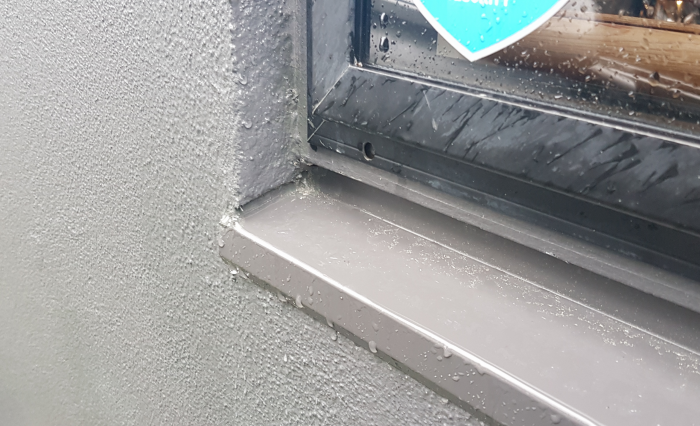
Insulclad Window Sill Upgrade
PVC sills removed and upgraded with metal sill flashing with ends turned up.
Make sure the probes are read within 6 months or the first winter following sill upgrade in case the window miter is defective and needs resealing. The sill flashing only deflects surface water, not draw water out from defective window miters.
NB: Generally sill upgrades are done following probe installation and in conjunction with RotStop to ensure framing remains durable after it dries out.
PVC sills removed and upgraded with metal sill flashing with ends turned up.
Make sure the probes are read within 6 months or the first winter following sill upgrade in case the window miter is defective and needs resealing. The sill flashing only deflects surface water, not draw water out from defective window miters.
NB: Generally sill upgrades are done following probe installation and in conjunction with RotStop to ensure framing remains durable after it dries out.
 uPVC Window Sill Failure – EIFS Cladding NZ (Insulclad, Rockcote) FolderExplains EIFS window sill failures 1. 2002 version buckled cracked leaking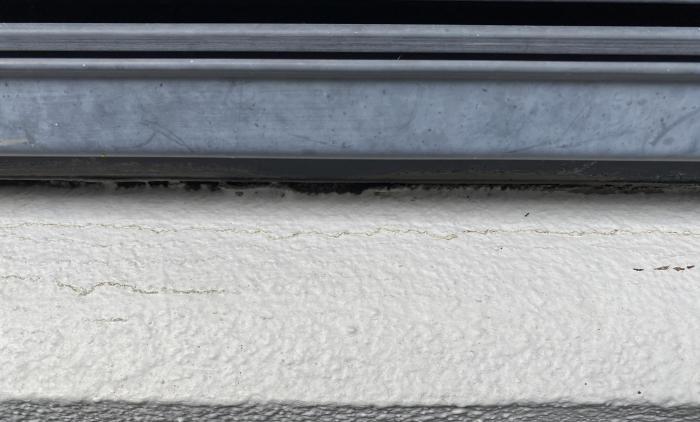
Cracking and slight deformation (buckling - cupping) along the sill edge. This is a common early sign of movement in uPVC sill systems within EIFS cladding, allowing water to enter through the corner joint behind the cladding.
2. 2005 version cracking leaking (cavity as well)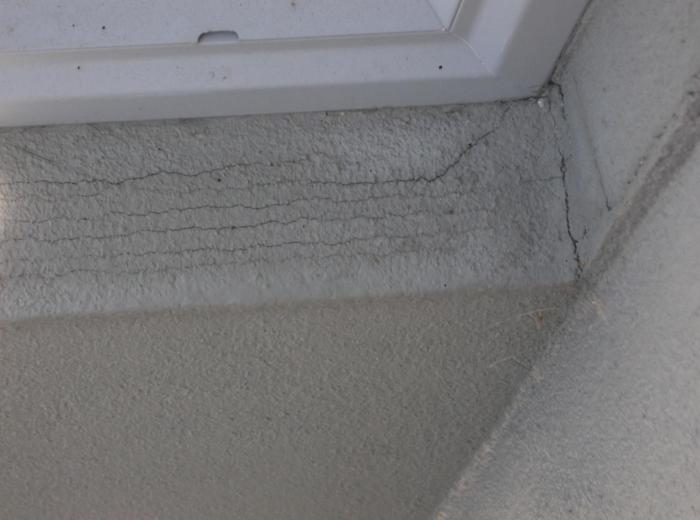
Visible cracking at the sill-to-jamb junction. This is a sign that the uPVC sill to Jamb corner has opened, creating pathways for moisture entry.
3. 2005 version cracking leaking (cavity)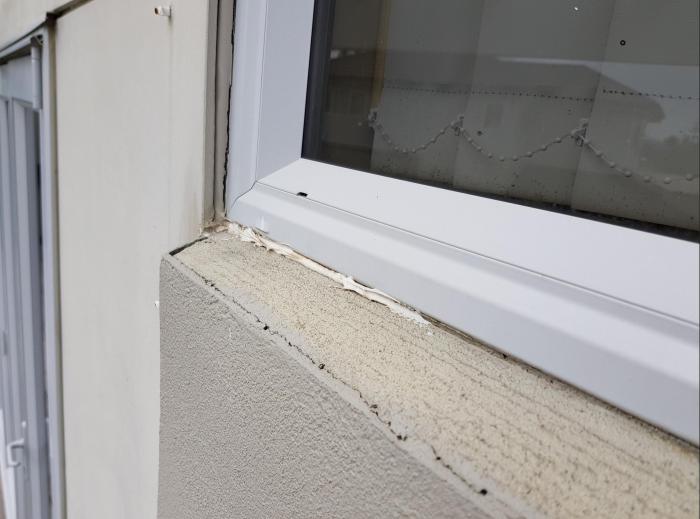
Multiple cracks along the sill face. Repeated thermal movement causes progressive joint separation over time. This is an extreme situation where the uPVC has cupped and separated from the Jamb connection and plaster allowing water to enter behind the cladding. Sealant has been applied in an attempt to stop visible leakage to the floor.
4. 2002 version plastered over leaking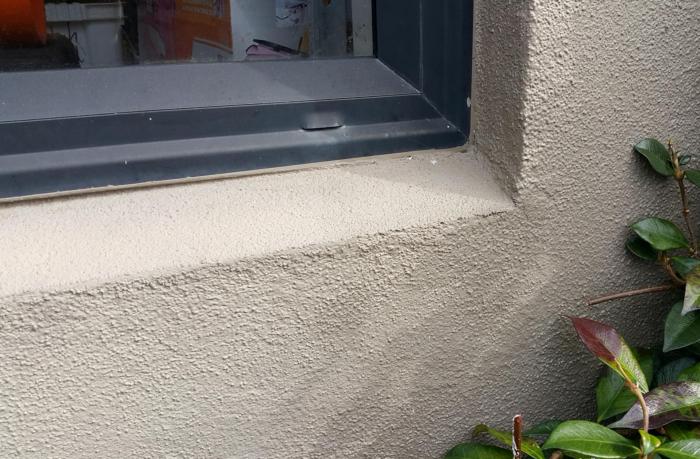
This sill has been re-plastered in an attempt at covering the fine cracks and sill junction to stop leakage in behind the cladding. These repairs often conceal ongoing movement and do not prevent water entry behind the cladding.
5. 2002 version new sill (2008) leaking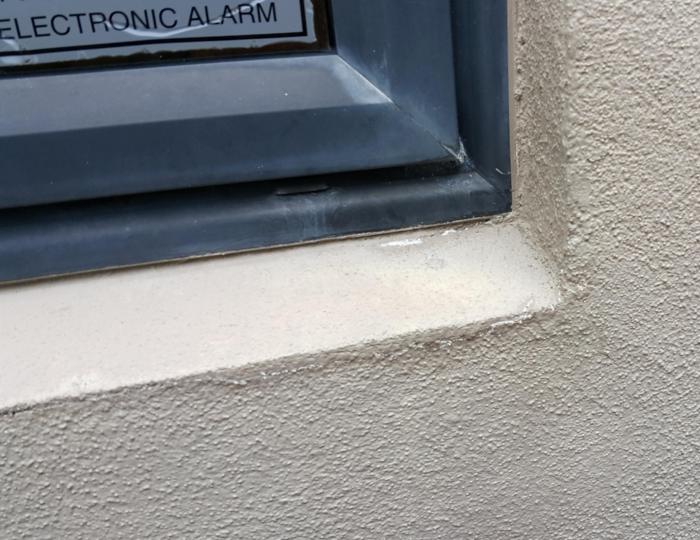
Relatively clean re-plastered and painted sill gives the appearance that it is working but within 3 years, staining, salt bleed and minor cracking re-appeared. Subtle signs like this are often overlooked. To trained professionals they indicate past failure and repairs that do not address the junctions weathertightness allowing further entry of water behind the cladding and into framing. In many cases, external surfaces can appear sound while moisture is already present within the wall causing decay.
6. 1998 version cracked leaking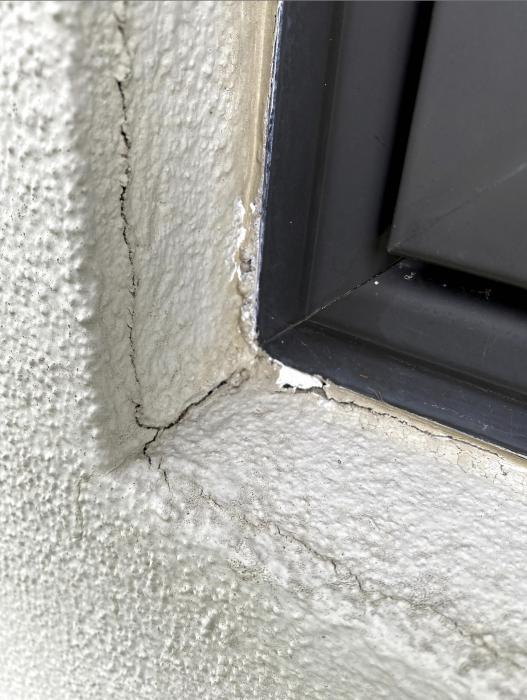
Visible cracking at the sill-to-jamb junction. Water enters, wets the framing, and causes decay — all hidden from view without invasive testing.
uPVC Window Sill Failure in EIFS Cladding
uPVC window sill flashings were widely introduced in the early 1990s to replace earlier plaster-based sill systems used in EIFS (polystyrene) cladding. Failures became evident shortly after installation, including de-bonding, joint opening, and distortion under the plaster. Numerous variations have since been introduced in an attempt to reduce failure at sill and corner junctions. Modified versions of these flashing systems are still used to form window reveals, combining uPVC flashings, polystyrene backing, plaster coatings, and sealants. The performance of the system relies on these materials remaining bonded and continuous. Over time, movement, shrinkage, and material incompatibility can lead to joint separation, allowing moisture to enter behind the cladding.
Why uPVC Window Sills Leak
uPVC sill and jamb junctions are vulnerable to movement from thermal cycling. As materials expand and contract, joints can open, adhesives can break down, and sealants lose effectiveness. Typical installation methods introduce a vertical joint in the polystyrene backing directly above the sill-to-jamb junction. This creates a pathway where water can track down behind the cladding and enter at the flashing interface. Gaps at sill ends are also common where the flashing has not been cut precisely to the sill angle, providing a direct pathway for water entry from the time of installation.
How Sill Failure Leads to Structural Damage
Once water enters behind the cladding, it can wet the building paper and framing. Moisture may remain concealed within the wall assembly and is often not visible at the surface. Where timber framing is untreated or lightly treated, prolonged moisture exposure can lead to progressive decay. In treated timber, moisture may persist without immediate structural failure but can still affect long-term durability. Because moisture entry is often hidden, damage can develop over time before being identified.
EIFS Window Sill Failure – Real Examples and Cut-Outs
The images that follow show how uPVC sill failures develop and how they are identified during inspection. Typical external signs include cracking at sill corners, horizontal cracking along the sill, and repeated sealant repairs. These areas are often repainted or resealed, masking the underlying condition. When the cladding is opened, separation at sill-to-jamb junctions, failed adhesive bonds, and gaps at sill ends are commonly observed. These conditions allow water to pass behind the cladding and into the wall assembly. Moisture can track down internal joints in the polystyrene backing, entering at the flashing junction and wetting underlying materials.
uPVC window sill flashings were widely introduced in the early 1990s to replace earlier plaster-based sill systems used in EIFS (polystyrene) cladding. Failures became evident shortly after installation, including de-bonding, joint opening, and distortion under the plaster. Numerous variations have since been introduced in an attempt to reduce failure at sill and corner junctions. Modified versions of these flashing systems are still used to form window reveals, combining uPVC flashings, polystyrene backing, plaster coatings, and sealants. The performance of the system relies on these materials remaining bonded and continuous. Over time, movement, shrinkage, and material incompatibility can lead to joint separation, allowing moisture to enter behind the cladding.
Why uPVC Window Sills Leak
uPVC sill and jamb junctions are vulnerable to movement from thermal cycling. As materials expand and contract, joints can open, adhesives can break down, and sealants lose effectiveness. Typical installation methods introduce a vertical joint in the polystyrene backing directly above the sill-to-jamb junction. This creates a pathway where water can track down behind the cladding and enter at the flashing interface. Gaps at sill ends are also common where the flashing has not been cut precisely to the sill angle, providing a direct pathway for water entry from the time of installation.
How Sill Failure Leads to Structural Damage
Once water enters behind the cladding, it can wet the building paper and framing. Moisture may remain concealed within the wall assembly and is often not visible at the surface. Where timber framing is untreated or lightly treated, prolonged moisture exposure can lead to progressive decay. In treated timber, moisture may persist without immediate structural failure but can still affect long-term durability. Because moisture entry is often hidden, damage can develop over time before being identified.
EIFS Window Sill Failure – Real Examples and Cut-Outs
The images that follow show how uPVC sill failures develop and how they are identified during inspection. Typical external signs include cracking at sill corners, horizontal cracking along the sill, and repeated sealant repairs. These areas are often repainted or resealed, masking the underlying condition. When the cladding is opened, separation at sill-to-jamb junctions, failed adhesive bonds, and gaps at sill ends are commonly observed. These conditions allow water to pass behind the cladding and into the wall assembly. Moisture can track down internal joints in the polystyrene backing, entering at the flashing junction and wetting underlying materials.
Window featureband moulding issues Folder 20250418_153631 _SC_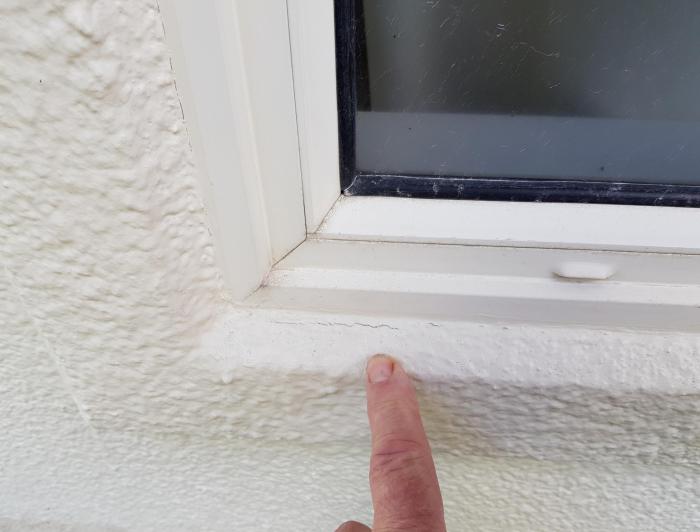
Window features are often added by forming a build-up moulding or attachment of feature band to express window depth. This one is fitted to Harditex cladding and has experienced regular cracking. Cracking is often caused by movement example wetting and drying changes in timber framing and cladding dimensions resulting in sealants tearing. In this case sealant is applied over the flange in deeper quantity believing the cracking is the source of water.
20250418_153647 _SC_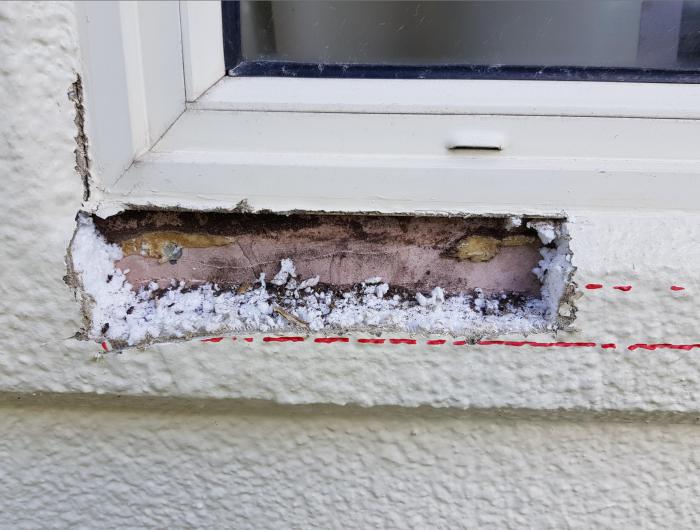
On removal of sill moulding band the Harditex was visibly wet and mouldy. The Harditex had not been primed or waterproofed prior to the bands application so any water entering cracks or in this case overflowing Taylor Fascia the water would track around the heads of the windows, run down the Jambs and spear across the Harditex as it had all been face/surface sealed. This leads to wet framing and decay. Repairing the torn sealant was not an applicable maintenance choice.
20250418_154017 _SC_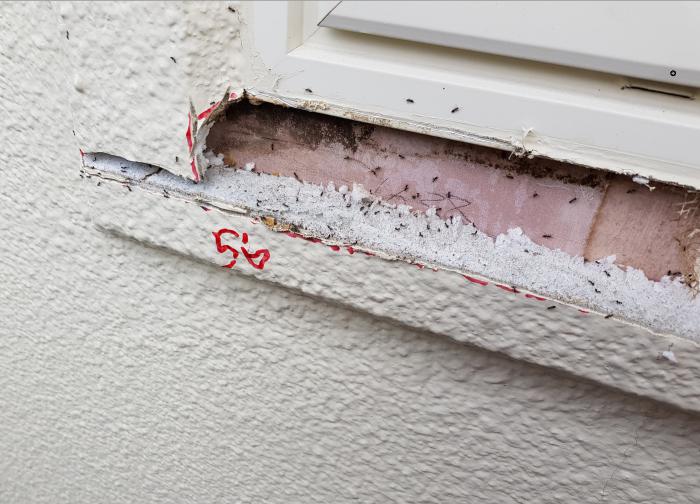
On exposure the Harditex joint had not even been jointed indicating the bands went on early before any sealing, even to sheets had been done. Ants are a good indicator of dampness.
Window sill replacement plaster homes Folder 01 Standard plaster sill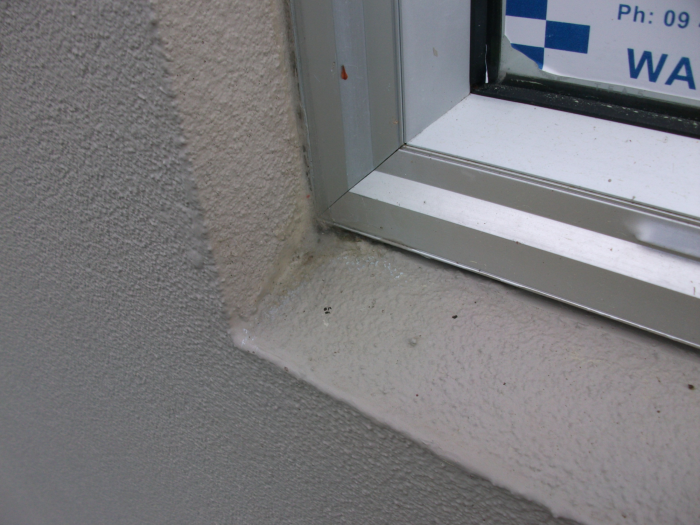
Plaster cladding recessed sill detail
This shows an as constructed 2002 standard looking window sill belonging to the family of polystyrene plaster clad homes Insulclad, Rockote and a few others. The window is set back (recessed) to give a fake impression of solid concrete construction. Underneath the sloped plaster is a variety of uPVC sill flashings. Underneath is untreated timber framing.
This window sill looks smart and maintained BUT it isn't. Its leaking and the framing has decayed. After just 6 years. No tell tale signs. Skirtings, carpets, linings and cladding all looking good with no cracks.
Read on.
This shows an as constructed 2002 standard looking window sill belonging to the family of polystyrene plaster clad homes Insulclad, Rockote and a few others. The window is set back (recessed) to give a fake impression of solid concrete construction. Underneath the sloped plaster is a variety of uPVC sill flashings. Underneath is untreated timber framing.
This window sill looks smart and maintained BUT it isn't. Its leaking and the framing has decayed. After just 6 years. No tell tale signs. Skirtings, carpets, linings and cladding all looking good with no cracks.
Read on.
80 stucco without sill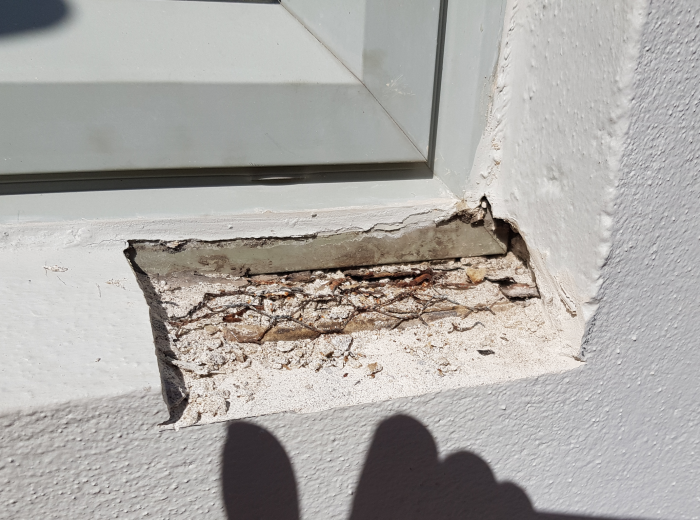
Stucco window sill
No flashing but well treated framing
This is a common window sill with stucco. To form a deeper reveal the window has been set back onto 50mm battens which increases the window reveal 40mm plus the thickness of the stucco.
The chicken wire showing is the reinforcing to the stucco, hammered down onto the framing which is not ideal. The plaster sill has been formed about 15mm over the sill flange of the window which over time has repeatedly cracked and let water in.
Three things have saved this building.
Metal sills were installed and it dried out in just over a year. What's unique here is the building nearly had 2 of the 'belts and braces' - treated timber and a cavity. It just lacked flashings. Now these are installed this home does not need a reclad. If the framing was H1 or untreated and face fixed it would be in a seriously damaged state.
No flashing but well treated framing
This is a common window sill with stucco. To form a deeper reveal the window has been set back onto 50mm battens which increases the window reveal 40mm plus the thickness of the stucco.
The chicken wire showing is the reinforcing to the stucco, hammered down onto the framing which is not ideal. The plaster sill has been formed about 15mm over the sill flange of the window which over time has repeatedly cracked and let water in.
Three things have saved this building.
- The timber framing was wet frame boron at a level greater than current H1.2 - probably to the old C8 which is 0.8%BAE twice current treatment. C8 is insect, decay and termite resistant
- The stucco is over a cavity batten - yes we have been using cavity battens since the boron inquiry of 1952 - just it costs extra for the 1 inch furring battens. Unfortunately the cavity system had a horizontal batten around the base that prevented air circulation but the gap meant the stucco was not in direct contact with the framing so the boron was not severely leached
- Previous owners had regularly painted which temporarily resealed the sills. It could then dry out and with treated timber decay was being managed. You can see all the thick paint onto the window flange.
Metal sills were installed and it dried out in just over a year. What's unique here is the building nearly had 2 of the 'belts and braces' - treated timber and a cavity. It just lacked flashings. Now these are installed this home does not need a reclad. If the framing was H1 or untreated and face fixed it would be in a seriously damaged state.
Bowed pvc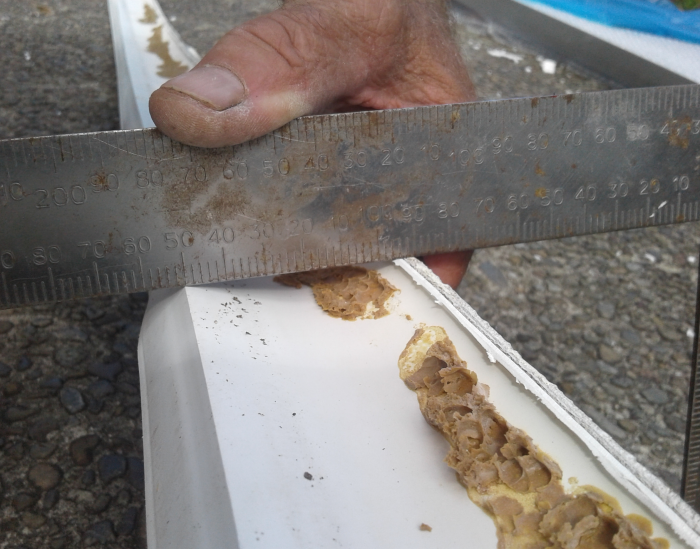
Insulclad 2002 uPVC sill buckled
Photo taken of underside of the uPVC sill showing how bowed it has become causing plaster to crack and pressure on corner soaker ripping it apart. This lets water in and wets the framing, insulation, linings and carpets over time.
Applying paint, or more plaster or sealant is a waste of time as the cracked uPVC is underneath. I have tried all these things and found sometimes it worked but most of the time it didn't. I was able to find out as I use moisture probes to check whether the wet framing had dried out. If not more work is needed. Other companies paint, seal or plaster and pretend they have fixed it but after a few years you find out they didn't. Wasted money and extra damage caused waiting to find out.
In this case the framing was treated to H3.1 so did not decay but the insulation, linings, carpets and flooring has become quite wet - even with a cavity.
Cavities work in theory but every window is a penetration through the entire wall system which means water can skip across and in.
Photo taken of underside of the uPVC sill showing how bowed it has become causing plaster to crack and pressure on corner soaker ripping it apart. This lets water in and wets the framing, insulation, linings and carpets over time.
Applying paint, or more plaster or sealant is a waste of time as the cracked uPVC is underneath. I have tried all these things and found sometimes it worked but most of the time it didn't. I was able to find out as I use moisture probes to check whether the wet framing had dried out. If not more work is needed. Other companies paint, seal or plaster and pretend they have fixed it but after a few years you find out they didn't. Wasted money and extra damage caused waiting to find out.
In this case the framing was treated to H3.1 so did not decay but the insulation, linings, carpets and flooring has become quite wet - even with a cavity.
Cavities work in theory but every window is a penetration through the entire wall system which means water can skip across and in.
Corner soaker melted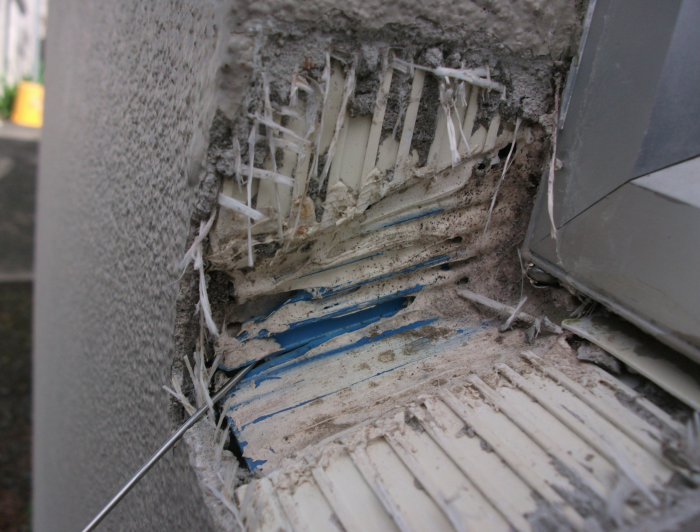
Insulclad 2002 version II
Blue soaker melted away
Blue corner soaker is yet another attempt by Insulclad to stop water getting in. Why so many new ideas - because they are all failing.
The issue this time is the 'blue soaker' Insulclad designed to keep the uPVC sill and Jamb water tight was glued with MS sealant. Unfortunately neither BRANZ, Insulclad, Council, builder or plasterer bothered to read the MS Sealant label which stated MS is not compatible with the plastics the Blue soaker was made with. The blue soaker 'melted', became holed and water poured in wetting framing.
When Insulclad did change the glue they went to liquid nails which worked great for a few years and then it lost adhesion. Water now bypasses the Blue soaker.
Unfortunately the wet framing was untreated so decayed. The sill had no signs of cracks. Water was able to get in over the sill behind the window flange.
Blue soaker melted away
Blue corner soaker is yet another attempt by Insulclad to stop water getting in. Why so many new ideas - because they are all failing.
The issue this time is the 'blue soaker' Insulclad designed to keep the uPVC sill and Jamb water tight was glued with MS sealant. Unfortunately neither BRANZ, Insulclad, Council, builder or plasterer bothered to read the MS Sealant label which stated MS is not compatible with the plastics the Blue soaker was made with. The blue soaker 'melted', became holed and water poured in wetting framing.
When Insulclad did change the glue they went to liquid nails which worked great for a few years and then it lost adhesion. Water now bypasses the Blue soaker.
Unfortunately the wet framing was untreated so decayed. The sill had no signs of cracks. Water was able to get in over the sill behind the window flange.
Cracked sill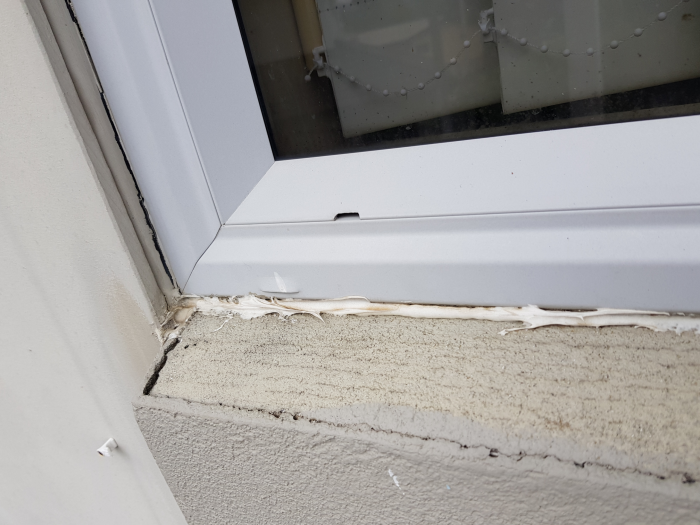
Insulclad 2003 version failed
uPVC sills had shrunk back, bowed and cracked.
The parallel cracking follows the lines of the ridges in the uPVC extrusions. Insulclad knowing they had issues with adhesion created ridges along the top of the sills and Jambs intended to provide mechanical compression to the uPVC. Unfortunately the ribs meant the plaster had unequal thicknesses which became weak points which cracked along the length in neat lines. The second problem is the plaster sets up a surface tension like laminating single surfaces which then causes the uPVC to bow. This bowing accentuates the cracks at each rib. This lets more water in.
The actual problem though is the uPVC shrinks, bows and pulls away at the corners ripping any sealant and the Blue soakers apart. A gap is formed for water to enter.
Insulclad has spent a lot of time experimenting at your cost as you now have to deal with the failures they covered up with plaster and paint. Unfortunately these have failed.
In this image the owner noticed water inside so applied sealant themselves along the joint between the window flange and plaster. This was completely useless.
This type of failure exposes the credibility of the construction industry as a whole. Insulclad was backed by a BRANZ Appraisal. Councils accepted it on face value without any testing.
The External Moisture building regulation E2.3 states if it 'could' leak then it is not compliant. This begs the question why so many different attempts and how they continued supplying a product without any formal testing. ie it could leak until proven otherwise.
Like it or not you are the test bed witnessing the failure first hand.
Install moisture probes. At least these provide the test and you will have the facts - is it working or not.
uPVC sills had shrunk back, bowed and cracked.
The parallel cracking follows the lines of the ridges in the uPVC extrusions. Insulclad knowing they had issues with adhesion created ridges along the top of the sills and Jambs intended to provide mechanical compression to the uPVC. Unfortunately the ribs meant the plaster had unequal thicknesses which became weak points which cracked along the length in neat lines. The second problem is the plaster sets up a surface tension like laminating single surfaces which then causes the uPVC to bow. This bowing accentuates the cracks at each rib. This lets more water in.
The actual problem though is the uPVC shrinks, bows and pulls away at the corners ripping any sealant and the Blue soakers apart. A gap is formed for water to enter.
Insulclad has spent a lot of time experimenting at your cost as you now have to deal with the failures they covered up with plaster and paint. Unfortunately these have failed.
In this image the owner noticed water inside so applied sealant themselves along the joint between the window flange and plaster. This was completely useless.
This type of failure exposes the credibility of the construction industry as a whole. Insulclad was backed by a BRANZ Appraisal. Councils accepted it on face value without any testing.
The External Moisture building regulation E2.3 states if it 'could' leak then it is not compliant. This begs the question why so many different attempts and how they continued supplying a product without any formal testing. ie it could leak until proven otherwise.
Like it or not you are the test bed witnessing the failure first hand.
Install moisture probes. At least these provide the test and you will have the facts - is it working or not.
High scan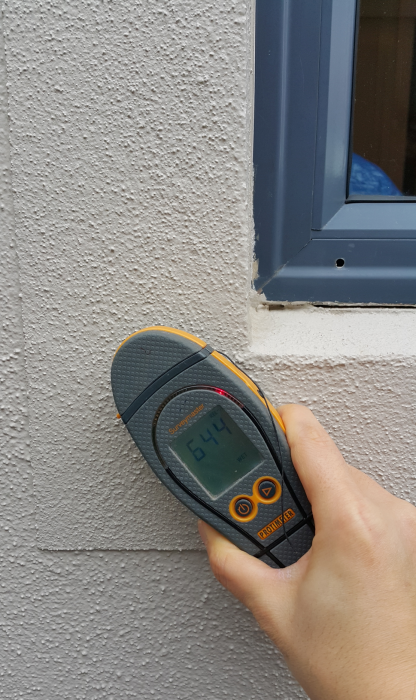
Polystyrene plaster sill leaking
What looks like a neat plaster sill is scanning high indicating wet plaster and polystyrene. No cracks. Recent paint. Sealant sound. But wet.
In summer this would be missed as the plaster would dry out in a week or so.
This home was lucky enough to have boron treated framing. We do find it sometimes in homes built during the leaky building era. We believe the boron treated timber was manufactured by a rural sawmill. Ever heard of a farmer building a hay barn out of untreated timber?
It pays to get your home tested. Its not all bad news. At least this owner only needed new window sills not new walls.
What looks like a neat plaster sill is scanning high indicating wet plaster and polystyrene. No cracks. Recent paint. Sealant sound. But wet.
In summer this would be missed as the plaster would dry out in a week or so.
This home was lucky enough to have boron treated framing. We do find it sometimes in homes built during the leaky building era. We believe the boron treated timber was manufactured by a rural sawmill. Ever heard of a farmer building a hay barn out of untreated timber?
It pays to get your home tested. Its not all bad news. At least this owner only needed new window sills not new walls.
Insulclad 1993 PVC sill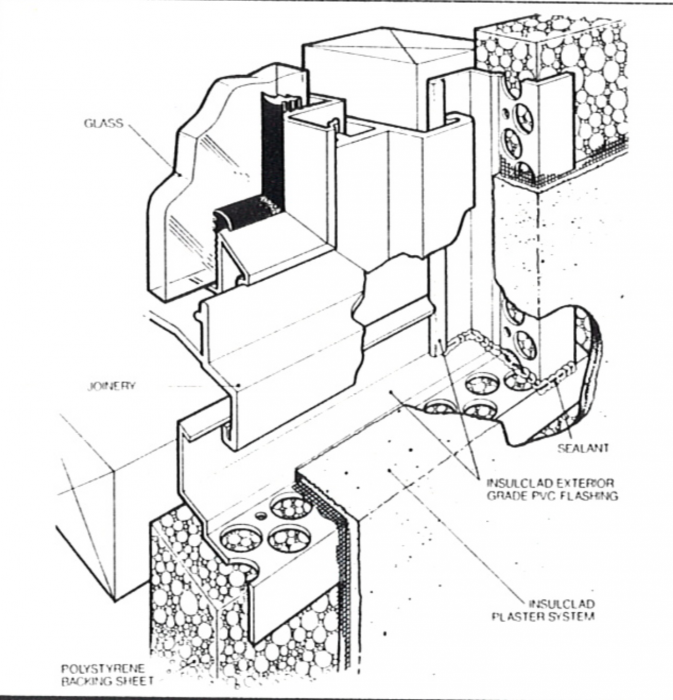
Insulclad 1993 version
Holes in uPVC for water to enter
What is amazing with this design of uPVC sill flashing is it is stepped and has holes in it. The design expects a plasterer to adhere the plaster using the holes (plaster drops through and anchors) and for paint to keep the bare uPVC and plaster joined together.
This cannot work at the sill to Jamb joint as the uPVC shrinks back, plasticizer breaks adhesion and general shrinkage eventually creates cracks and gaps for water to enter.
Their is no conceivable way this system was ever tested for durability. Durability of adhesion is cyclical temperature and humidity changes over time. I got Stevensons and Levenes telarc laboratories to test uPVC to SBR modified plaster adhesion and it lasted just 2 days out of a 3 month test before it failed.
The Hunn report stated BRANZ had never conducted any weathertightness testing on appraised claddings up to 2002. This cladding system could be on your house so don't expect it to be working. Invasively test now to find out.
If this window had H3 framing and a cavity and used on ground level walls only it may stand a chance. But bring in untreated timber without a cavity, no soffit and exposed to the rain on upper levels disaster is the only outcome.
Holes in uPVC for water to enter
What is amazing with this design of uPVC sill flashing is it is stepped and has holes in it. The design expects a plasterer to adhere the plaster using the holes (plaster drops through and anchors) and for paint to keep the bare uPVC and plaster joined together.
This cannot work at the sill to Jamb joint as the uPVC shrinks back, plasticizer breaks adhesion and general shrinkage eventually creates cracks and gaps for water to enter.
Their is no conceivable way this system was ever tested for durability. Durability of adhesion is cyclical temperature and humidity changes over time. I got Stevensons and Levenes telarc laboratories to test uPVC to SBR modified plaster adhesion and it lasted just 2 days out of a 3 month test before it failed.
The Hunn report stated BRANZ had never conducted any weathertightness testing on appraised claddings up to 2002. This cladding system could be on your house so don't expect it to be working. Invasively test now to find out.
If this window had H3 framing and a cavity and used on ground level walls only it may stand a chance. But bring in untreated timber without a cavity, no soffit and exposed to the rain on upper levels disaster is the only outcome.
Insulclad 2002 PVC sill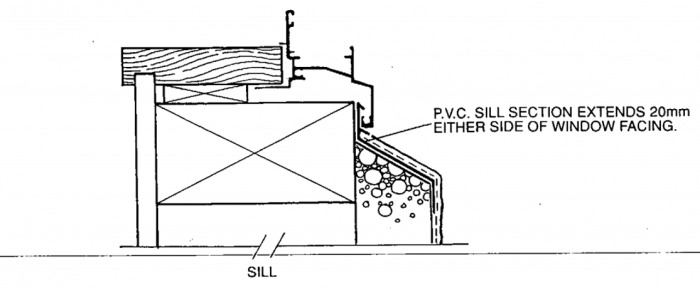
Insulclad 2002 face fixed sill
Showing the uPVC sill as black line covered in plaster.
The uPVC flashing only provides drainage from water running down over the window. It does not collect leakage from mullions or miters. Corner windows are always problematic with miters opening and leaking.
Whilst arched windows may have head flashings when the leak off the ends water drops down and is not collected by the sill, water gets in and rots the framing.
Stepped windows sill flashings have no ends so water runs off into the framing and not collected by the sill flashing. Once in water accumulates and rots the framing.
When we had wooden windows they all had full undersill trays to capture all these leaks and push it out over the cladding. This proven method, part of the 'belts and braces' has been lost in translation - plus treatment of framing stopped and ventilation got missed.
Now you own this home, you have no training on what went on over the last 50 years, but are left holding the baby and must sort it out????
Showing the uPVC sill as black line covered in plaster.
The uPVC flashing only provides drainage from water running down over the window. It does not collect leakage from mullions or miters. Corner windows are always problematic with miters opening and leaking.
Whilst arched windows may have head flashings when the leak off the ends water drops down and is not collected by the sill, water gets in and rots the framing.
Stepped windows sill flashings have no ends so water runs off into the framing and not collected by the sill flashing. Once in water accumulates and rots the framing.
When we had wooden windows they all had full undersill trays to capture all these leaks and push it out over the cladding. This proven method, part of the 'belts and braces' has been lost in translation - plus treatment of framing stopped and ventilation got missed.
Now you own this home, you have no training on what went on over the last 50 years, but are left holding the baby and must sort it out????
Insulclad 2004 PVC sill with cavity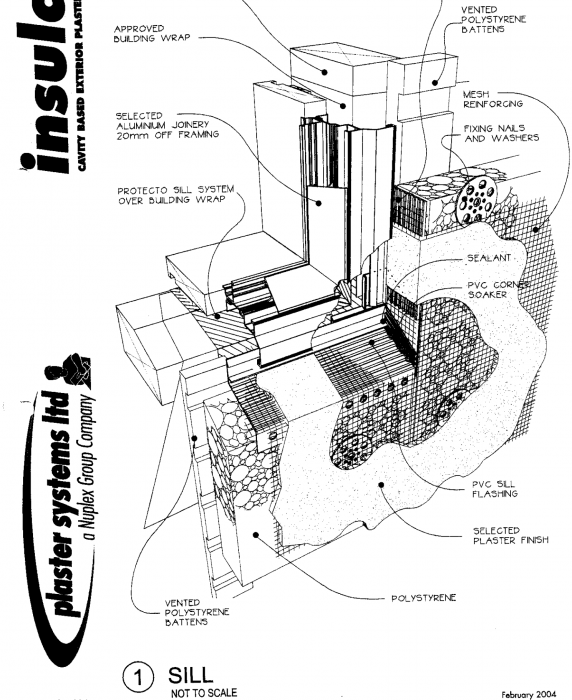
Insulclad 2004 version
Shows amazing detailing but nothing works.
Systemic failure at PVC corner soaker and PVC sill flashing.
Just because its pretty doesn't mean it works.
NB: this has a cavity and H1.2 treated timber so whilst it will fail the framing won't rot immediately. It may take 10-20 years but it will given time.
Shows amazing detailing but nothing works.
Systemic failure at PVC corner soaker and PVC sill flashing.
Just because its pretty doesn't mean it works.
NB: this has a cavity and H1.2 treated timber so whilst it will fail the framing won't rot immediately. It may take 10-20 years but it will given time.
Insulclad early PVC sill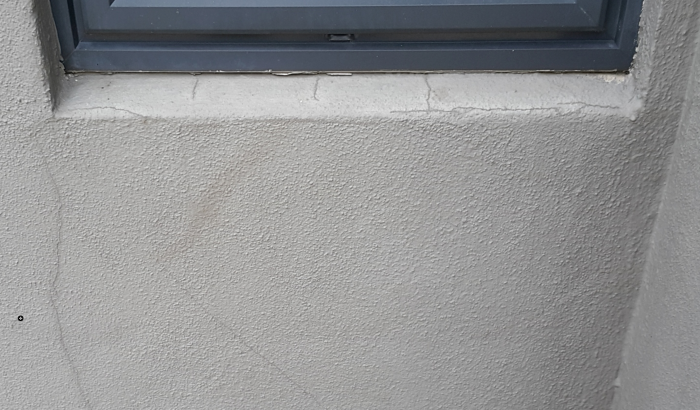
Cracked plaster sill
Insulclad 1993 version
Insulclad began a changeover from having no flashings (1985) to now having a uPVC one. The plaster has no acrylic additives and as it is thin micro-cracks as it sets and ages. In time these become visible. Whilst paint normally covers this type of crack some of the paints are quite impermeable which causes vapour build up beneath the plaster which cleaves off the uPVC (along with the plasticizes) allowing water into the polystyrene and then finding is way into the framing.
This home had H1 boron framing which helped keep decay at bay for a few years but by the time we came to invasively test it we found decay had set in.
Insulclad 1993 version
Insulclad began a changeover from having no flashings (1985) to now having a uPVC one. The plaster has no acrylic additives and as it is thin micro-cracks as it sets and ages. In time these become visible. Whilst paint normally covers this type of crack some of the paints are quite impermeable which causes vapour build up beneath the plaster which cleaves off the uPVC (along with the plasticizes) allowing water into the polystyrene and then finding is way into the framing.
This home had H1 boron framing which helped keep decay at bay for a few years but by the time we came to invasively test it we found decay had set in.
Old pvc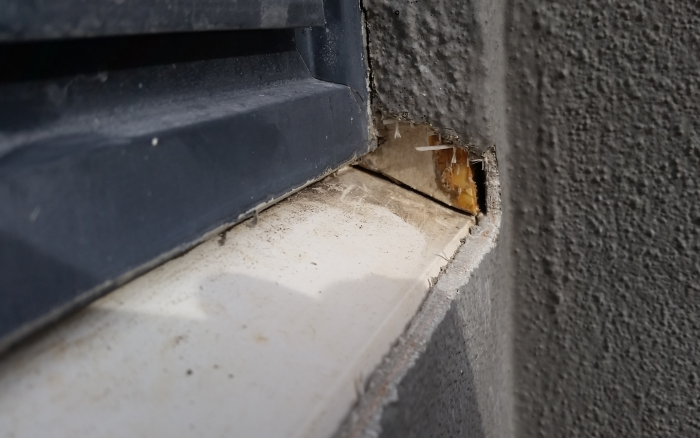
1998 Insulclad sill
Plaster removed showing uPVC sill and Jamb. No sealant joining the Jamb to the sill.
The breakdown process is no plaster adheres to uPVC for long. uPVC is extruded which requires plasticizes - which are like soap - which migrate to the surface during aging which causes adhesion loss. Then water gets underneath between the plaster and uPVC and in through the joint, into the cut sheet of polystyrene and into the framing wetting it. Wet H1 and untreated framing decays which is what happened here.
This 1999 build had untreated timber now severely decayed.
BRANZ Appraised Insulclad but not with this particular uPVC sill and Jamb detail. Arguing who supplied what is of little consequence now. The owner invasively tested to find out how severely damaged the framing had become before they made any decisions on repairs.
Plaster removed showing uPVC sill and Jamb. No sealant joining the Jamb to the sill.
The breakdown process is no plaster adheres to uPVC for long. uPVC is extruded which requires plasticizes - which are like soap - which migrate to the surface during aging which causes adhesion loss. Then water gets underneath between the plaster and uPVC and in through the joint, into the cut sheet of polystyrene and into the framing wetting it. Wet H1 and untreated framing decays which is what happened here.
This 1999 build had untreated timber now severely decayed.
BRANZ Appraised Insulclad but not with this particular uPVC sill and Jamb detail. Arguing who supplied what is of little consequence now. The owner invasively tested to find out how severely damaged the framing had become before they made any decisions on repairs.
PVC sill not sealed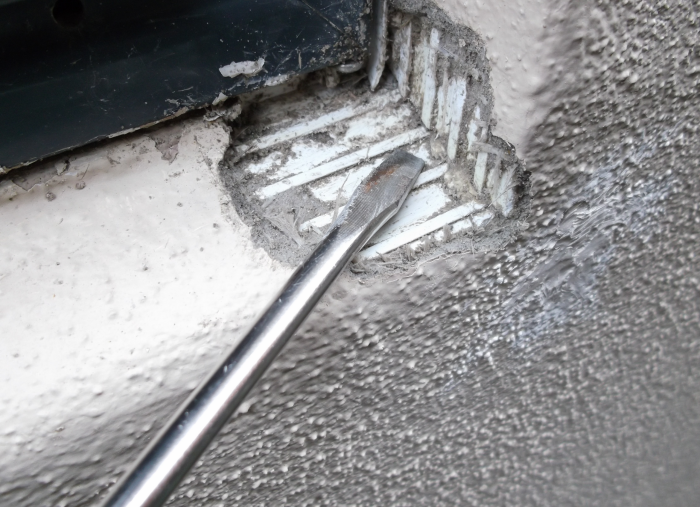
Insulclad 2002 version
uPVC sills leaking
This 2002 home uPVC sills were never sealed. Over time water entered and wet the framing.
BUT this home had LOSP Tin treated framing so had no decay.
All that is required is to upgrade the sill flashings as part of maintenance. Invasive testing showed things were not as bad as they could have been.
uPVC sills leaking
This 2002 home uPVC sills were never sealed. Over time water entered and wet the framing.
BUT this home had LOSP Tin treated framing so had no decay.
All that is required is to upgrade the sill flashings as part of maintenance. Invasive testing showed things were not as bad as they could have been.
Window sill replacement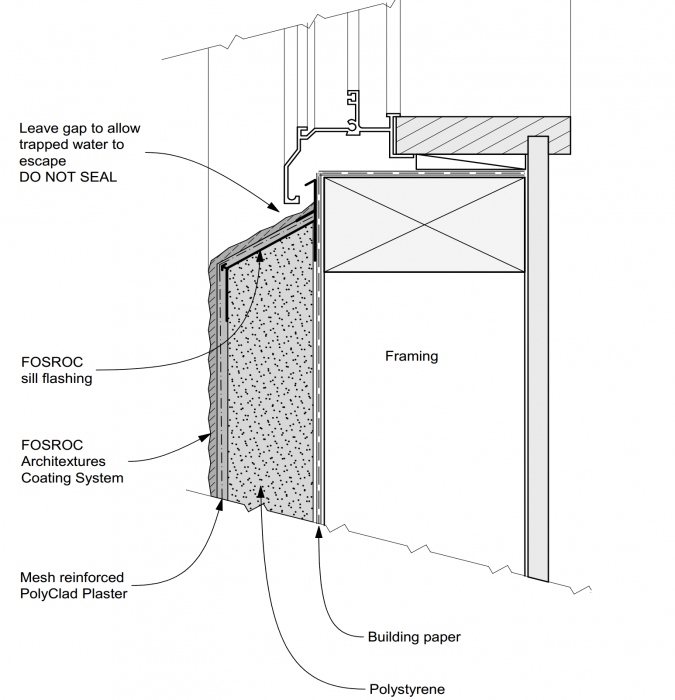
Fosroc 2002 sill
No cavity
It was not just Insulclad making mistakes. As Insulclad was an established player with BRANZ Appraisals everyone thought they could simply copy what they were doing and all things being equal it would work.
BRANZ just proof read the competing companies specifications and blindly issued yet another appraisal. Councils blindly accepted them. Specifiers knowing council would accept them then specified them. Builders just built what they were told to and as they were approved and they got paid kept doing it.
But copying dud technology does not work well. Fosroc meet the same fate.
The detail shows the uPVC sill flashing (dark black lines) embedded into the plaster relying on plaster to uPVC adhesion which failed.
No cavity
It was not just Insulclad making mistakes. As Insulclad was an established player with BRANZ Appraisals everyone thought they could simply copy what they were doing and all things being equal it would work.
BRANZ just proof read the competing companies specifications and blindly issued yet another appraisal. Councils blindly accepted them. Specifiers knowing council would accept them then specified them. Builders just built what they were told to and as they were approved and they got paid kept doing it.
But copying dud technology does not work well. Fosroc meet the same fate.
The detail shows the uPVC sill flashing (dark black lines) embedded into the plaster relying on plaster to uPVC adhesion which failed.
